
You know the basics. You can stay on time. You can make it through a song without losing the count. Then you look across the room at someone who seems calmer and more expressive, and your own movement suddenly feels stiff.
That gap is rarely talent. It usually comes from a few habits that are hard to focus on while you are still learning steps, timing, and partner connection. These bachata styling tips help you work on those details without adding movement your foundation cannot support.
At Sensual Movement, we think of styling as what your body does between the steps: how you hold your posture, finish a weight transfer, use a free arm, breathe through a pause, and respond to the music without interrupting the lead.
Although the title speaks to women because that is how many people search for this topic, everything below applies to anyone dancing the following role. Men follow too, and styling belongs to the role, not the gender. If you are wondering how to look better dancing bachata, start with control, not more movement.
Before You Style Anything, Read This
There is an order to good bachata styling for beginners: timing first, then the basics, then connection, then styling. If your weight is still arriving late or your frame changes every few counts, adding an arm line or body accent usually makes the dance harder, not cleaner.
Styling also never overrides the lead. When your partner is asking for a turn, direction change, or connection adjustment, that information comes first. Our guide on how to follow in sensual bachata explains that communication in more detail.
So where does styling fit? In the spaces that already belong to you: the tap, a held beat, the end of a transfer, or a pause when your weight has arrived, and the lead has left room for expression. If you are starting bachata with zero dance experience, expect this to take months, not a weekend. Work on one idea at a time until it feels natural.
10 Bachata Styling Tips to Practice One at a Time
Start with one tip at a time, giving yourself space to build each movement into your dancing naturally before adding the next.
1. Fix Your Posture Before You Fix Anything Else
Stack your ribcage over your hips, let your shoulders settle down and back, keep the chest comfortably open, and bring your chin level. You are not trying to stand rigidly. You want a balanced shape that can move in any direction.
Posture affects your frame, turns, arm lines, and weight transfer, so it changes more than one part of your dancing at once.
Practice for two minutes in front of a mirror: take your basic with your eyes forward and ribs stacked over your hips. Then repeat without the mirror. The common mistake is watching your feet, which drops the head and chest and makes the whole body look more tense.
For a broader look at what consistent practice develops, explore how your body changes after bachata classes.
2. Keep Your Weight Forward on the Balls of Your Feet
If your weight settles heavily into your heels, transitions can feel slow, and turns become harder to organize. Keep a light forward intention through the balls of the feet while your torso stays stacked.
This does not mean lifting your heels all night or leaning forward. The change happens under the feet, not by tipping the body.
Practice your basic slowly for two minutes and notice where your weight lands. Before the next step, confirm that the standing leg is truly supporting you. The common mistake is pitching the chest forward to create a false feeling of being “on the toes.” Stay upright and let the feet do the work.
3. Learn What Your Free Arm Is Doing
The unheld arm is one of the most visible parts of a follower’s styling, and it is easy to forget. Start with one reliable bachata arm styling position: a soft curve, elbow slightly bent, shoulder relaxed, and hand active without being rigid.
Practice for three minutes in front of a mirror. Dance a basic while one arm stays in an imaginary partner frame and the free arm keeps that comfortable curve. Switch sides, then add one slow opening and return.
The common mistakes are opposite extremes: a stiff straight arm or a completely limp hand. Aim for tone without tension. Your free arm should feel connected to your torso rather than added after the movement.
4. Let the Hips Come From the Step, Not From Effort
Clean bachata hip movement comes from weight transfer and leg action. Move fully onto one foot, keep the knees soft, and let the supporting leg lengthen. The opposite side of the pelvis can then rise naturally.
Practice slowly without music. Step side to side, finish each transfer, and notice what the pelvis does after your weight arrives. Do not try to make the movement bigger. Add the 1-2-3-tap count only after the transfer feels clear.
The common mistake is pushing the hips before the body has actually moved onto the standing leg. That creates tension and can disrupt timing. If you feel discomfort in your knees or lower back, stop and ask an instructor to check your alignment.
5. Take the Tap Seriously
The tap is not empty time. Beat four gives you a moment to finish the phrase, breathe, and make a small musical choice after your weight has settled.
Keep your options simple: let the hip finish naturally, add a small torso accent, use your eyes to acknowledge a musical change, or hold the moment slightly longer when the music supports it. You do not need to style every tap.
Practice one full song with only one styling choice on beat four. On another day, practice leaving the tap completely simple. The common mistake is trying a new accent every four counts. Musicality includes knowing when not to add anything.
6. Work on Isolations Separately From Dancing
Isolations teach you to move one area while keeping the rest of the body relatively quiet. That control is essential for bachata body movement, especially when ribcage, hips, shoulders, and head later need to coordinate.
Practice without music. Spend one minute moving the ribcage side to side without letting the hips follow, then one minute each on hips and shoulders. Finish by combining two areas slowly.
The common mistake is chasing range. Bigger is not automatically better. Keep the movement comfortable, clear, and repeatable. A few focused minutes each day will build more control than forcing large movements you cannot yet isolate.
7. Learn to Spot Your Turns
Spotting helps you stay oriented during turns. Pick a point at eye level, keep your eyes on it as long as comfortable, then let the head turn and bring the eyes back to the same point.
Practice next to a wall. Start with quarter turns, then half turns, keeping your steps small and posture lifted. Move to full turns only when the head action and balance feel steady.
The common mistake is snapping the head faster than the body can manage. Spotting is not a race. Keep it slow enough that you finish controlled and know where you are facing. Speed comes after the pathway is reliable.
8. Slow Down: The Pause Is the Styling
Beginners often feel responsible for filling every beat. More experienced dancers are usually more comfortable leaving space. A held moment can look more controlled than several rushed decorations because it shows you are still on time without needing to prove it.
Practice with a song you know well. Dance the basic and choose only two moments in the entire song to pause or hold a finished position for an extra fraction of a beat, as long as the partnership allows it.
The common mistake is freezing the whole body. A pause is not stiffness. Keep breathing, maintain your frame, and stay responsive to the lead. Sometimes the strongest styling choice is simply doing less.
9. Build Body Waves From a Clear Sequence
A body wave should be an organized sequence, not one large push. Think of the movement travelling through the spine rather than pushing the stomach forward: upper chest, chest and ribs, then hips.
If you have read the styles of bachata we explained, you know different styles use body movement differently. In sensual bachata, control matters more than speed.
Practice for three minutes in a mirror from the side. Move through the sequence slowly, reset, and repeat. The common mistake is trying to make the wave fast before the order is clean. If you cannot pause at each stage, slow it down.
10. Practice Your Face
A focused face is normal when you are learning. But if your jaw is clenched and your eyes stay on the floor, tension can spread into the neck, shoulders, and arms.
Facial expression does not mean forcing a smile. Soften the jaw, let the lips rest naturally, lift the eyes, and exhale when the music gives you a pause.
Practice for one song at home. Every eight counts, check three things: jaw soft, eyes up, breath moving. The common mistake is “acting” an expression, which usually adds tension. Aim for presence rather than performance. Your face should look like you are in the dance, not reviewing a mental checklist.
What to Wear So Your Styling Actually Shows
Choose clothing that lets you move without becoming another thing to manage. Fabric should move easily, hems should allow the knees to bend, and sleeves or loose straps should not catch on a partner’s hand.
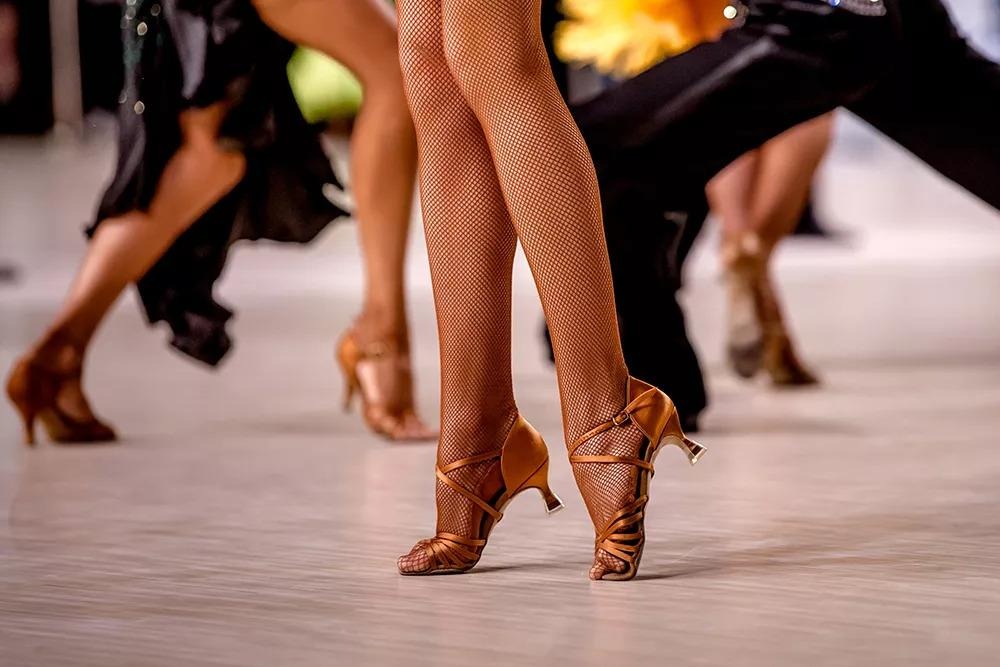
For shoes, prioritize control over height. Smooth or suede soles can help on a suitable dance floor, while secure straps or a well-fitting closed shoe keep the foot stable. If you want heels, start lower than you think you need. A heel you can comfortably dance in for two hours is more useful than one that changes your balance after fifteen minutes.
Keep long hair secured on a crowded floor so it does not hit a partner during turns, and avoid earrings that can catch on hair or clothing. A dramatic hair whip is not a beginner priority on a crowded social floor. The goal is practical: wear something that lets you focus on timing, connection, and technique.
The Mistakes That Make Beginners Look Tense
Stiffness is often several small habits happening at once. You may be gripping your partner’s hand, anticipating the next turn, watching your feet, holding your breath, or styling on a count your partner needs.
Watch for these patterns:
- Gripping the Hand: Keep the connection light and responsive.
- Starting Before the Lead: Wait for the information instead of guessing.
- Watching Your Feet: Trust the basics and keep your eyes forward.
- Holding Your Breath: Exhale through pauses and reset your shoulders.
- Styling Through Transitions: Give priority to the lead when your arm, frame, or weight is needed.
- Apologizing Repeatedly: One quick acknowledgment is enough. Then return to the song.
Our guide to common bachata mistakes beginners make covers more beginner habits and how to correct them without overthinking every dance.
How to Practice at Home in 10 Minutes a Day
You do not need a long practice session. You need a short routine you can repeat consistently:
- 2 Minutes: Posture and basic steps, with eyes forward and full weight transfer.
- 3 Minutes: Isolations for ribcage, hips, and shoulders.
- 3 Minutes: Slow body waves, focusing on sequence rather than size.
- 2 Minutes: Spotting with quarter turns, half turns, and controlled full turns if balance stays steady.
Film yourself once a month instead of every session. Monthly video makes progress easier to notice without turning practice into constant self-criticism.
Home practice builds vocabulary, but partner timing develops with real people and real music. In our bachata classes in NYC, you can get feedback on details that are difficult to feel from inside your own body. Then use Friday Bachata Sensual Nights to apply what survives outside a drill. Our guide on how to improve your social dancing can help you practice with more intention.
Start With One Change
Do not try to rebuild your dancing in one night. Pick one habit and give it enough attention to become normal. If you are starting tonight, choose posture: eyes up, shoulders relaxed, ribcage stacked over hips, and weight fully arriving on each step.
Then bring that work into a room where someone can actually see it. A trained eye can catch timing, alignment, and connection errors that are almost impossible to diagnose from the inside. Meet our instructors and keep building technique one layer at a time. The goal is not to add more. It is to make what you already know feel clearer, calmer, and more musical.
Frequently Asked Questions
1. How long does it take to look good dancing bachata?
There is no fixed timeline because timing, balance, connection, and confidence develop at different speeds. Most beginners notice visible changes after several months of consistent practice. Focus on one skill at a time. Clean basics, relaxed posture, and complete weight transfer usually improve your dancing before complicated styling does.
2. Do I need heels to dance bachata?
No. Heels are optional, not a requirement for good styling. Start in footwear that feels secure and lets you turn comfortably on the floor you are using. If you want to wear heels later, choose a lower, stable pair first and build technique before increasing height.
3. What is the difference between styling and following?
Following is your response to the lead, timing, direction, and connection of the partnership. Styling is personal expression added only where that communication leaves room. Good styling supports the dance rather than competing with it. When the lead needs your arm, weight, or attention, following comes first.
4. Can I learn bachata styling from YouTube?
Video can help you see shapes, drills, and vocabulary, especially for isolations or arm pathways. It cannot reliably tell you what your own body is doing or whether a movement is affecting timing and connection. Use tutorials for ideas, then get in-person feedback before making those habits permanent.
5. Why do I feel stiff even though I know the steps?
Knowing the sequence and moving comfortably are different stages of learning. Stiffness often comes from watching the feet, incomplete weight transfer, holding your breath, or styling while still thinking about the basics. Simplify: keep the timing, soften the shoulders, breathe, and let repetition reduce the mental load.
6. Is styling only for women?
No. Styling belongs to the dancer and the role, not to a gender. Any gender can work on posture, free-arm control, pauses, isolations, and musicality. Leads also style, although their choices must still protect clear communication, timing, space, and the responsibilities of the lead role.


